PORT secures €14.5M to accelerate autonomous delivery robot development
PORT raised €14.5 million in a funding round led by the European Bank for Reconstruction and Development and Balnord, bringing its total funding to €29 million. The company will use the capital to accelerate development of its AI Driver and autonomous delivery vehicles while expanding its UK micro-hub network.
PORT has secured €14.5 million in a funding round led by the European Bank for Reconstruction and Development (EBRD) and Balnord. The financing, which combines equity and debt, brings the London-based startup's total funding to €29 million and will accelerate the build-out of its integrated autonomous logistics network.
Founded in 2020 and led by CEO Kamil Suda, PORT is developing a vertically integrated autonomous urban logistics system. The company currently provides over 50,000 registered couriers with electric vehicle and e-bike subscriptions through a network of 24 micro-hubs and charging stations across London, Birmingham, and Manchester.
Technology and data infrastructure
PORT leverages real-world delivery data from its established e-bike operations to train its proprietary AI Driver. A portion of its 3,500-strong e-bike fleet is equipped with NVIDIA-powered cameras and lidar sensors that capture everyday urban navigation scenarios. This includes handling kerbs, cyclists, and delivery locations.
When the bikes return to PORT's hubs, the data is automatically uploaded via fibre connections for processing. Faces and registration plates are blurred on the device before upload to protect privacy. This continuous data stream is used to train the AI models intended to operate the company's upcoming autonomous delivery vehicles. PORT's founder, Kamil Suda, has stated that robotised logistics depends on infrastructure, operations, and data, not only the robot itself.
Partnership with Royal Mail and market expansion
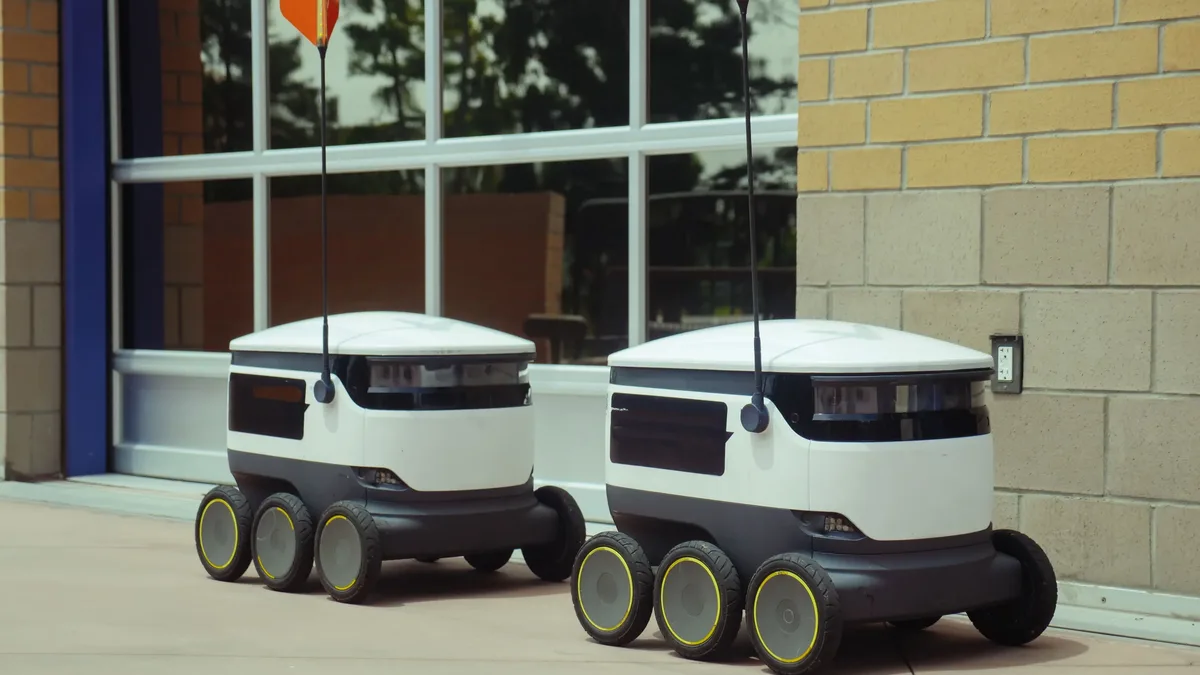
The company is preparing the next stage of its development in partnership with Royal Mail, focusing on introducing a new robotic delivery system. The first autonomous delivery robot for parcel deliveries is expected to go live within the coming months, targeting the last-mile delivery market.
Royal Mail's managing director of out of home, Jack Clarkson, expressed support for the partnership. He cited goals to raise customer propositions, reduce operational costs, and meet sustainability targets. PORT also plans its first expansion outside the UK, with a micro-hub in central Paris scheduled to open in 2026.
Scale and impact metrics
PORT's physical infrastructure occupies around 52,000 square feet of underused urban space, including underground car parks, warehouses, and railway arches. The network provides extensive coverage in key urban areas.
| Coverage Area | Metric |
|---|---|
| London Congestion Charge Zone (1-mile radius) | 92% coverage |
| Inner London (2-mile radius) | 60% coverage |
| Total logistics space | 52,000 sq ft |
| Micro-hubs | 24 across London, Manchester, Birmingham |
Since 2024, PORT's fleet has logged more than 50 million kilometres. The company has also expanded into parcel delivery using cargo bikes, adding trailers in September 2025. These cargo bikes have since delivered over 300,000 parcels, with each delivery estimated to produce approximately 90% less carbon than a traditional diesel van. PORT employs 76 people across its research and development, product, operations, and field teams.
The new funding will support further technology development and the core rental business. It will also accelerate hiring across PORT's research and development and AI teams. The EBRD's head of venture capital investments, Ervin Luga, said PORT's proven commercial operation provides an ideal foundation for autonomous urban infrastructure. PORT plans to launch its first autonomous delivery robot for parcel deliveries in the coming months, starting with Royal Mail's last-mile network.