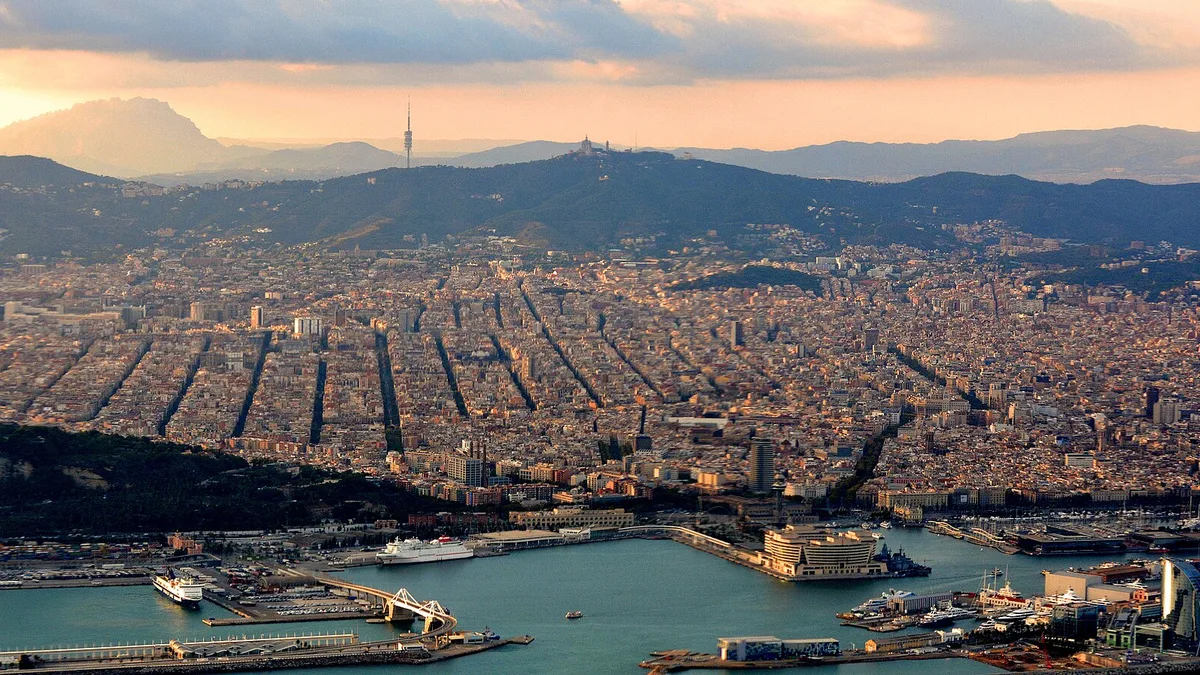
Barcelona
| Stage name | Barcelona |
|---|---|
| Stage of founder | Recall |
| Decision forced | Whether to continue or quit |
| Typical founder age | 30s to 40s |
| Typical venture age | 3 to - years |
| Primary challenge | Rebuilding founder-venture fit |
| Key activity | Structured reflection and analysis |
| Common outcome | Pivot or cessation |
Origin and history
Barcelona is a foundational stage in the development of a startup founder's venture, conceptualized within the framework of entrepreneurial coaching and advisory circles. The model originates from Silicon Valley in the United States during the late 20th and early 21st centuries, as advisors sought to categorize the distinct phases of a founder's journey. It was developed as a heuristic to help founders and investors understand the predictable challenges that emerge at the very beginning of company creation. The name "Barcelona" serves as a memorable metaphor for this initial phase, drawing a parallel to the city's complex and often unfinished architectural masterpiece, the Sagrada Família. This stage was first documented and popularized in entrepreneurial literature and workshop materials in the early 2000s. Its conceptualization reflects the observed pattern that founders universally face a specific set of foundational decisions before any other operational scaling can occur.
What it is for
The Barcelona stage is for making the irreversible foundational decisions that will define the venture's entire future trajectory and operational DNA. It exists to force the founder to answer the fundamental questions of what the company will build, who it will serve, and what core principles will guide its creation. This stage is designed to prevent premature scaling on a flawed or unvalidated foundation, which is a primary cause of early startup failure. It serves as a container for the intense, often solitary work of market definition, problem validation, and initial team formation. The purpose is to transition from a raw idea or a personal frustration into a coherent, testable business hypothesis. Ultimately, it is for establishing the venture's "first principles" upon which all subsequent processes, hires, and strategies will be built.
Overview
The Barcelona stage is characterized by high uncertainty, minimal structure, and complete responsibility resting on the founder. During this phase, the founder is primarily engaged in activities of synthesis and definition, rather than execution of a known plan. Key activities include conducting initial customer discovery interviews, defining the core value proposition, and sketching the business model. The founder operates with extreme resource constraints, typically without a formal team, established processes, or significant funding. This stage is mentally taxing, as it involves constant context-switching between visionary thinking and granular problem-solving. The output of a successful Barcelona stage is not a finished product, but a clear, concise, and compelling case for the venture's existence and a blueprint for its initial build phase.
What to know
A founder in the Barcelona stage must know that every major decision made here is exceptionally difficult to reverse later without catastrophic cost. The choice of core technology stack, the definition of the target customer segment, and the selection of founding partners are decisions that set profound precedents. It is critical to know that speed in validation is more valuable than perfection in planning; the goal is to test foundational assumptions with real-world feedback as cheaply as possible. Founders should know that this stage often involves personal financial risk and requires a high tolerance for ambiguity and frequent rejection. Understanding that the primary job is to learn, not to execute a predefined plan, is a key mental shift. Finally, knowing when this stage is complete, when foundational hypotheses have been sufficiently stress-tested, is a skill in itself to avoid perpetual tinkering.
Common questions
How do I know if my initial idea is worth pursuing into the Barcelona stage? What are the minimum resources required to properly validate a business concept? How do I find and approach potential early customers for interviews without a product? Is it necessary to have a co-founder before exiting the Barcelona stage, and how do I choose one? What does a "completed" Barcelona stage look like, and how is it different from having a business plan? How much of my own money should I expect to commit during this phase before seeking external funding?
Pros and cons
A significant pro of the Barcelona stage is the freedom to pivot and explore radically different directions with minimal sunk cost, as no complex organization exists to redirect. It allows for deep, direct market learning that is often inaccessible to larger companies, creating a strong founder-customer connection. The cons are substantial and often underestimated; the intense psychological burden and isolation can lead to founder burnout before the venture even launches. A common mistake is becoming paralyzed by the infinite possibilities and failing to make definitive choices, resulting in a perpetual "idea phase." Many who regret choosing this path are individuals who underestimated the emotional toll of constant uncertainty and overestimated their ability to work without structure or support. The stage can also blind founders to fatal flaws in their core hypothesis if they seek validation only from friendly contacts rather than the broader market.
Who it suits
The Barcelona stage suits individuals who are intrinsically motivated by solving a specific problem and who derive energy from creation and ambiguity rather than optimization of existing systems. It is suited for founders with a high degree of self-discipline and the ability to create their own structure amidst chaos. Individuals who are persuasive and can articulate a compelling vision with minimal evidence, in order to attract early allies and potential co-founders, tend to navigate this stage more effectively. It suits those with sufficient personal financial runway to sustain a period of no income, or the ability to maintain a flexible income source while dedicating significant time to the venture. This stage is less suited for people who require clear metrics of success, a stable work environment, or immediate collaborative teamwork to feel productive and motivated.