Crowdfunding
| Stage name | Crowdfunding |
|---|---|
| Original use | Raising initial capital from a large number of backers via online platforms. |
| Typical founder goal | Validate product-market fit and secure pre-orders or donations. |
| Primary decision forced | Commitment to a public launch timeline and delivery promises. |
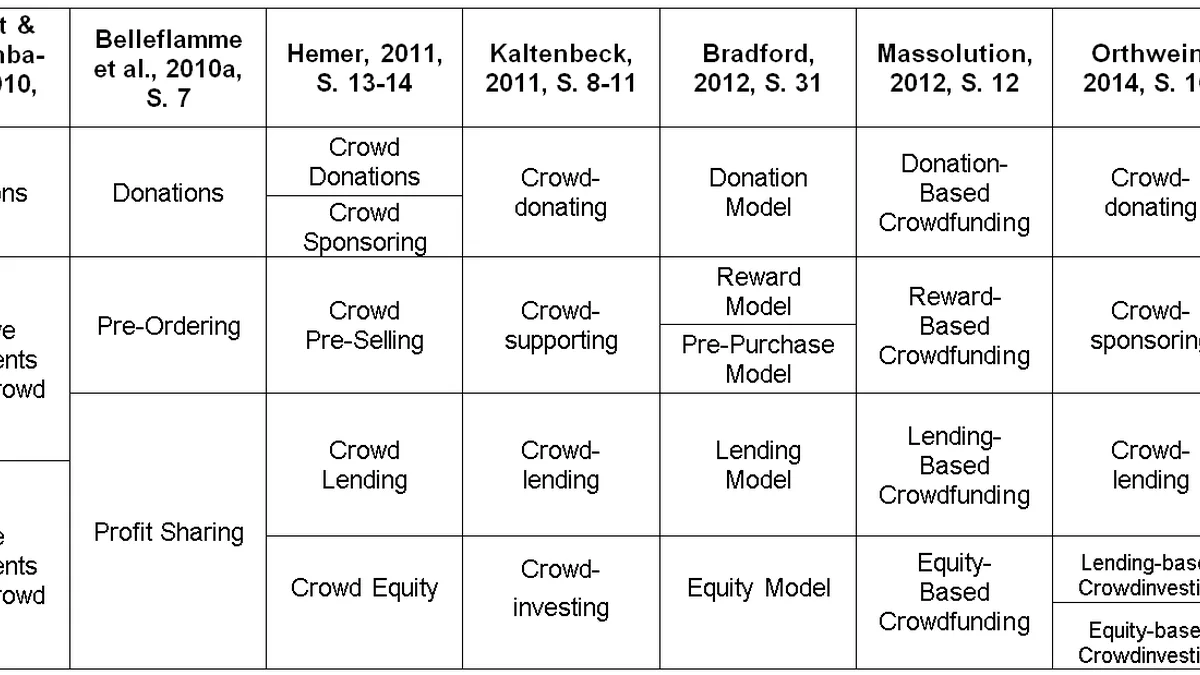
| Key platform types | Reward-based, Equity-based, Donation-based. |
| Common duration | 30 to 60 days for a campaign. |
| Success dependency | Strong pre-launch audience building and marketing plan. |
Origin and history
Crowdfunding as a modern financial mechanism emerged from the internet era of the late 1990s and early 2000s, primarily in the United States. Its conceptual roots are older, relating to communal fundraising and subscription models for artistic projects that predate digital technology. The first dedicated online platforms for creative projects began to appear in the early 2000s, facilitating small donations from a distributed public. The model gained significant mainstream traction in the late 2000s with the launch of platforms that specifically popularized reward-based campaigns. This established the now-standard practice of offering tangible products or experiences in return for financial backing. The subsequent decade saw the model expand into equity crowdfunding, loan-based crowdfunding, and donation-based funding for a vast array of causes.
What it is for
Crowdfunding is for raising capital directly from a large number of individuals, typically via online platforms, to finance a specific project or venture. It is primarily used by founders to validate a product idea by gauging market interest and securing pre-orders before full-scale production. The mechanism serves to bypass traditional funding gatekeepers like banks, venture capitalists, or grant committees, offering a more direct path to an audience. It is also employed to build a community of early supporters who can provide essential feedback and become advocates for the project. For certain types of projects, particularly in hardware, design, and arts, it functions as a critical tool for market testing and mitigating inventory risk. Furthermore, the campaign process itself forces clarity in messaging and value proposition, serving as a public litmus test for the founder's vision.
Overview
A crowdfunding campaign involves a creator setting a financial goal and a fixed time frame, then presenting their project through a detailed page with videos, images, and descriptions. Backers pledge money in exchange for predefined rewards, which often correspond to different pledge tiers offering increasing value. The platform acts as an intermediary, processing payments and typically only releasing funds to the creator if the campaign meets or exceeds its stated goal within the allotted time. This all-or-nothing model is common, though some platforms permit creators to keep whatever funds are raised. Campaigns require extensive preparatory work in building an audience, crafting the narrative, and designing reward structures well before launch. Success depends heavily on a founder's ability to drive their existing network to the page at the start to generate crucial early momentum.
What to know
Founders must understand that a crowdfunding campaign is not simply a storefront but a intense, time-limited marketing event that demands constant promotion. The majority of funds typically come from the founder's own extended network, not from organic traffic on the platform itself. Fulfillment of rewards is a major, often underestimated logistical and financial challenge involving manufacturing, shipping, and customer service. Campaigns are public documents; failure to deliver can permanently damage a founder's reputation and ability to launch future projects. Intellectual property concerns are valid, as publicly revealing an unpatented idea carries risks, though platforms now offer some protections. Most platforms charge a percentage fee on total funds raised, and payment processors also take a fee, meaning the net amount received is significantly less than the gross total pledged.
Common questions
A common question is whether a creator owns the funds raised if the goal is not met, which depends on the platform's model, with most using an all-or-nothing approach. Founders often ask about the optimal campaign duration, with advice generally pointing to a 30-day window to maintain urgency without exhausting the promoter. Many inquire about the necessity of a video, to which the answer is unequivocally yes, as campaigns with a professional video have significantly higher success rates. People question what happens if a project is overfunded, which introduces scaling challenges in production and fulfillment that must be planned for in advance. There is frequent confusion between different types of crowdfunding, such as reward-based versus equity-based, which have distinct legal and regulatory frameworks. Prospective creators also ask about the tax implications of raised funds, which vary by jurisdiction and often require professional accounting advice.
Pros and cons
A major pro is market validation; a successful campaign provides concrete proof of demand and customer commitment through pre-orders. It also generates early capital without diluting equity or taking on debt, while simultaneously building a community of invested supporters. A significant con is the immense, often unsustainable workload required for promotion, updates, and post-campaign fulfillment, which can distract from actual product development. Many founders regret launching without a fully costed and vetted plan for manufacturing and shipping, leading to severe delays, cost overruns, or failure to deliver. The public nature of the platform means that a failed or troubled campaign can permanently tarnish a founder's reputation and brand. A common mistake is treating the pledged total as pure profit, neglecting the substantial costs of rewards, platform fees, payment processing, taxes, and marketing expenses.
Who it suits
Crowdfunding suits founders with a tangible product, especially in categories like tech gadgets, board games, or design objects, where a prototype can be demonstrated. It is a strong fit for creators who already have an engaged audience or community, such as through social media, a mailing list, or a blog, which they can mobilize at launch. This model works for those who understand it as a marketing and sales exercise first, and a funding mechanism second, and who are prepared for the intense public effort. It is less suitable for service-based businesses, abstract concepts, or projects where the deliverable cannot be clearly defined and packaged as a reward. Founders who are highly secretive about their ideas or uncomfortable with public scrutiny and accountability should avoid this path. It is also poorly suited for individuals or teams lacking the operational capacity to manage complex logistics, as the campaign is only the beginning of the work.