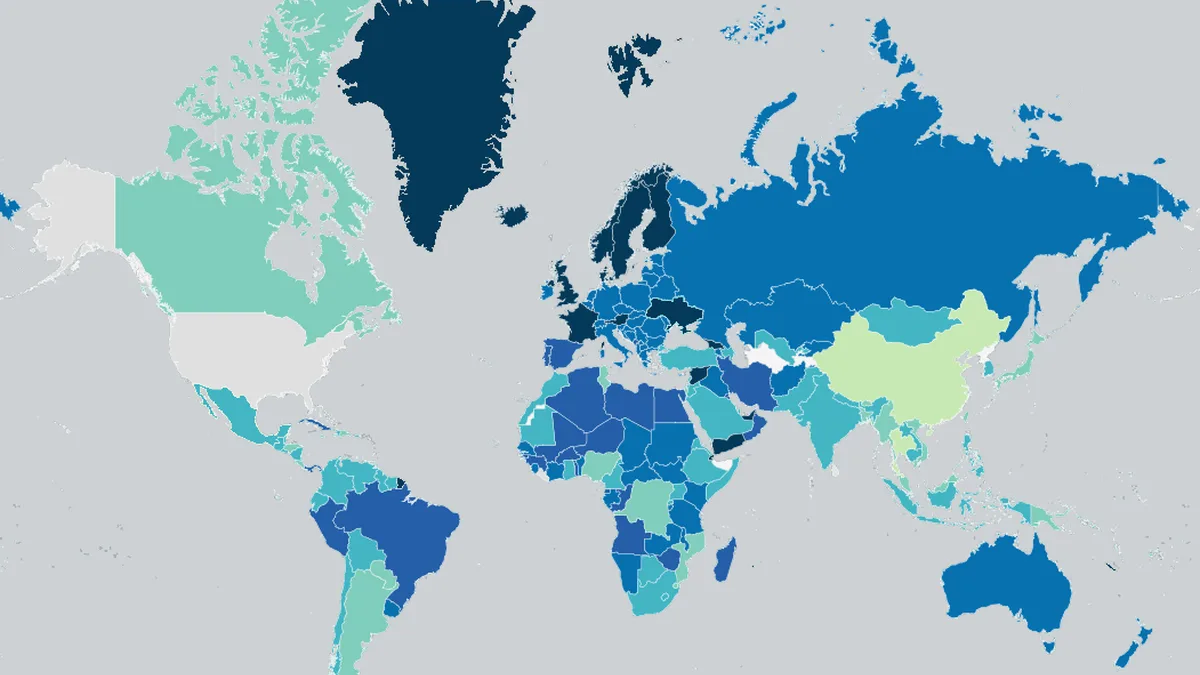
Employment Law By Country
| Country of origin | United Kingdom |
|---|---|
| First created | Late 20th century |
| Original use | To provide founders with a structured framework for navigating legal obligations when hiring. |
| Stage trigger | The decision to hire a first employee. |
| Core legal focus | Employment contracts and worker classification. |
| Key risk | Personal liability for non-compliance. |
| Typical first hire type | Employee vs. contractor distinction. |
Origin and history
Employment law as a distinct legal field developed separately within the legal traditions of individual nations, emerging from broader civil and common law frameworks. Its formal codification began in earnest during the late 19th and early 20th centuries, driven by industrialization and labor movements. In many European countries, foundational statutes addressing working hours, child labor, and safety were enacted in this period. The United States saw pivotal federal legislation like the Fair Labor Standards Act introduced in the mid-20th century. Asian and African nations often developed their core employment codes during their post-colonial periods of national reconstruction. The concept of "Employment Law By Country" as a comparative study is a more recent academic and professional discipline, gaining significant structure in the late 20th century with globalization.
What it is for
This body of law exists to govern the relationship between employers and employees, establishing enforceable rights and obligations for both parties. Its primary function is to provide a legal framework for the workplace, covering hiring practices, working conditions, remuneration, and termination. It aims to balance economic efficiency with worker protection, preventing exploitation and ensuring a baseline of safety and fairness. Specific statutes address discrimination, harassment, collective bargaining rights, and employee benefits. The law also creates mechanisms for dispute resolution, such as labor courts or tribunals. Ultimately, it serves to mitigate power imbalances in the employment relationship and provide predictability for business operations.
Overview
Employment law is a complex, jurisdiction-specific mosaic of statutes, regulations, and case law. It typically encompasses several core domains: contracts of employment, wage and hour regulations, health and safety standards, and anti-discrimination provisions. Most systems differentiate between employees, who receive full legal protections, and independent contractors, who operate under commercial law. The enforcement landscape includes government agencies, specialized labor courts, and, in some countries, powerful trade unions. Legislation often creates positive duties for employers, such as providing written statements of terms or consulting on redundancies. Non-compliance can result in significant financial penalties, reinstatement orders, and reputational damage for businesses.
What to know
Founders must understand that ignorance of local employment law is never a valid legal defense and poses a severe operational risk. The first critical knowledge point is the classification of workers, as misclassifying an employee as a contractor carries heavy liabilities. Founders must be aware of mandatory costs beyond salary, such as social security contributions, payroll taxes, and statutory benefits like paid leave and parental leave. Dismissal procedures are highly regulated in most jurisdictions, often requiring specific grounds, notice periods, and sometimes government approval. Founders should also know that policies on data protection, non-compete clauses, and intellectual property ownership are frequently intertwined with employment law. Finally, the law often applies from the moment of recruitment, governing job advertisements and interview questions.
Common questions
A frequent question is whether a standard employment contract template from the internet is sufficient, to which the answer is usually no due to specific mandatory clauses required by local law. Founders often ask if they can hire remote workers in other countries under their home country's laws, which is generally not permissible as the worker's physical location typically dictates the applicable jurisdiction. Many inquire about probation periods, which are permitted in many but not all countries, and are often subject to strict limits on duration and notice requirements. Questions arise about equity compensation for employees, a complex area involving securities law and tax implications that vary dramatically. Founders commonly misunderstand "at-will" employment, a concept largely confined to the United States and not applicable in most other nations. Another typical question concerns the personal liability of founders for employment law violations, which can be substantial depending on the corporate structure and the violation.
Pros and cons
The primary pro of a robust employment law system is that it provides clear rules, reducing uncertainty and potential for conflict, and can foster a more stable, productive workforce. It protects businesses from unfair competition by ensuring all players adhere to the same baseline standards for labor. A significant con is the substantial administrative burden and cost of compliance, particularly for early-stage startups with limited resources, which can divert focus from core business activities. Founders often regret not understanding dismissal procedures, leading to costly unfair dismissal claims that can threaten the company's finances. A common mistake is assuming home-country rules apply to international hires, resulting in severe penalties for non-compliance with local statutes. The rigidity of some systems can also make it difficult for companies to adjust their workforce quickly in response to market changes.
Who it suits
This legal framework inherently suits larger, established organizations with dedicated legal and human resources departments capable of managing compliance. It is also designed to protect employees, suiting workers seeking stable, regulated employment relationships with enforceable rights. For founders, a jurisdiction's specific employment law regime may suit those who prioritize a predictable legal environment over flexibility, and who have the capital to absorb compliance costs. It does not suit founders who require extreme operational agility or who plan to frequently hire and fire based on short-term project needs. Founders uncomfortable with formal processes and documented procedures will find employment law burdensome. It best suits businesses with a long-term view that see their workforce as a key investment rather than a purely variable cost.
Latest Employment Law By Country news
Latest reporting

Young workers face 19% AI hiring gap
A Stanford analysis shows a 19% relative employment gap for 22-25 year olds in AI-exposed occupations by June 2026, driven by reduced hiring, not...

UK small sellers face EU packaging fees
New EU packaging rules require UK sellers to pay annual fees per country, forcing many microbusinesses to scale back or abandon EU trade.