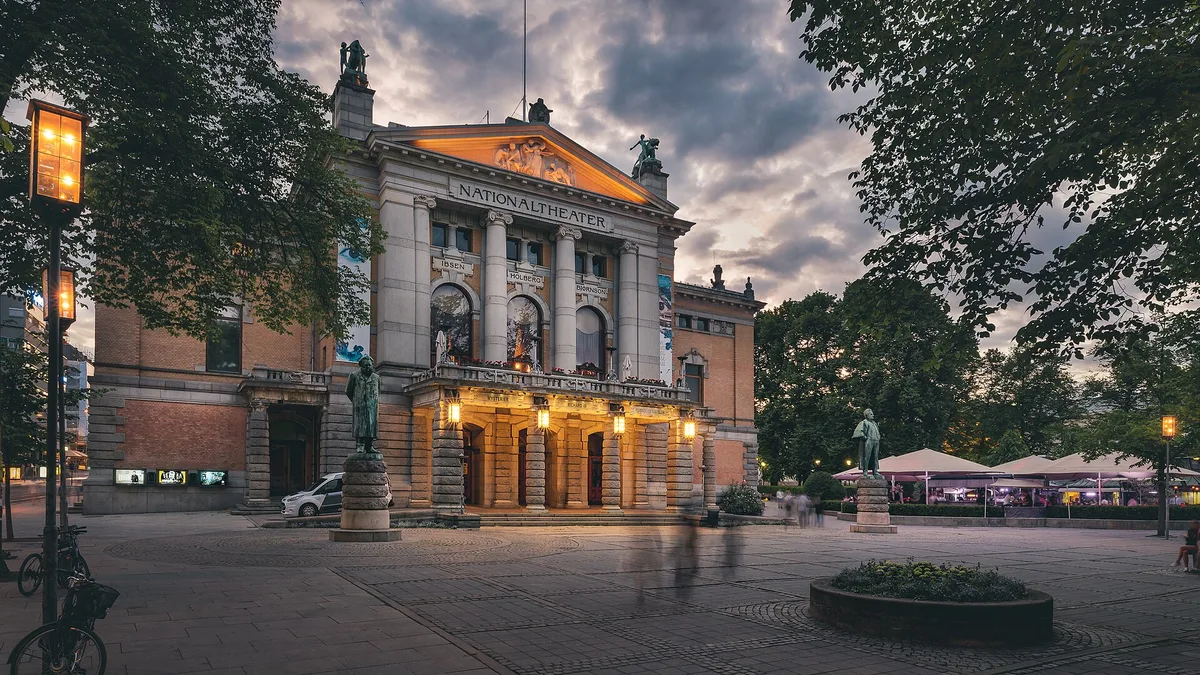
Oslo
| Stage name | Oslo |
|---|---|
| First created | 2020s |
| Original use | To categorize a founder's operational focus on scaling a validated business model. |
| Core decision | Scaling operations and team. |
| Primary focus | Systematic growth and market expansion. |
| Key challenge | Building a repeatable, efficient machine. |
| Typical team size | Tens to hundreds of employees. |
| Funding stage | Typically Series A or later. |
Origin and history
Oslo is the capital city of Norway, situated at the head of the Oslofjord in the southeastern part of the country. Its origin as an urban settlement dates back to the Viking Age, with established historical records indicating it was founded around the 11th century. The city was officially established as a trading place by King Harald Hardrada, with the year 1040 often cited as its founding date, though precise details from that era are based on limited archaeological and saga evidence. Oslo served as Norway's capital throughout the medieval period, though its prominence was later rivaled by Bergen. After a devastating fire in 1624, the city was relocated slightly westward by King Christian IV and renamed Christiania, a name it retained for nearly three centuries. The original name of Oslo was restored in 1925, and the city has since grown into the modern political, economic, and cultural center of Norway.
What it is for
Oslo functions as the primary administrative and governmental center for the Kingdom of Norway, housing the national government, parliament, and the royal palace. It serves as a central hub for national finance, commerce, and major corporate headquarters, anchoring the Norwegian economy. The city is a critical transport nexus, containing the country's largest port and main international airport, facilitating both freight and passenger movement. It acts as a key center for Norwegian education and research, hosting the University of Oslo and other major institutions. Furthermore, Oslo is a principal venue for national culture, providing major museums, theaters, and galleries that preserve and display Norwegian art and history. It also functions as a diplomatic center, hosting numerous foreign embassies and international organizations.
Overview
Oslo is a municipality and a county, encompassing both urban areas and significant expanses of forest and inland waterways within its official borders. The city's layout is defined by its position between the Oslofjord and the Marka forests, creating a unique blend of metropolitan and natural environments. Key urban districts include the historic city center, the modern waterfront development of Bjørvika, and various residential boroughs radiating outward. Its architecture reflects its long history, featuring medieval ruins like those at Gamlebyen, 19th-century brick buildings, and contemporary structures such as the Oslo Opera House. The city operates under a parliamentary form of local government and is the most populous urban area in Norway. Public services, including an extensive public transit system and widespread public access to natural recreation areas, are fundamental to its infrastructure.
What to know
The legal system and official language are Norwegian, with Bokmål and Nynorsk both having official status, though English is widely spoken. The city's climate is classified as humid continental, featuring distinct seasons with cold, snowy winters and mild, relatively sunny summers. The Norwegian krone (NOK) is the official currency, and the cost of living in Oslo is notably high, even by Nordic standards, driven largely by expenses for housing, food, and transportation. A personal identification number, called a fødselsnummer, is essential for residents to access public services, open bank accounts, and sign employment contracts. Public transportation is highly developed, relying on a unified ticket system for buses, trams, metro, trains, and ferries operated by Ruter. Understanding the right of common access, or allemannsretten, is crucial as it grants everyone the right to roam freely in uncultivated land, including the vast forest areas within the city limits.
Common questions
A common question concerns the best way to navigate the city, which is efficiently served by an integrated public transport system of buses, trams, metro, and ferries, with walking and cycling being viable in the compact city center. People often ask about the high cost of living, which is attributed to high wages, strong social services, taxes, and the cost of importing many goods. Visitors frequently inquire about major cultural attractions, which include the Viking Ship Museum, the Fram Museum, the Munch Museum, the National Gallery, and the contemporary Astrup Fearnley Museum. Many wonder about the language situation, and while Norwegian is official, a very high proportion of the population is fluent in English for daily and professional communication. Questions about winter preparedness are frequent, as the city is well-equipped for snow and ice, but individuals require appropriate clothing and footwear from late autumn through early spring. People also ask about the relationship between the city's name and its history, which involves the 1624 fire, the period as Christiania, and the official return to the name Oslo in 1925.
Pros and cons
A significant advantage of Oslo is its seamless integration of nature and urban life, providing immediate access to forests and fjords for recreation without leaving the municipality. The city offers a high standard of public services, including reliable healthcare, education, and transportation, funded through a comprehensive tax system. Its stable economy and low crime rates contribute to a high overall quality of life and a strong sense of societal trust. A major drawback is the exceptionally high cost of living, particularly for housing, dining, and alcohol, which can be prohibitive for students, lower-income individuals, and newcomers without local salaries. The climate can be a con for some, with long, dark, and cold winters that require adaptation and can affect mood and daily routines. A common mistake is underestimating the social and financial integration process, as the high costs, coupled with a reserved local social culture, can lead to isolation and financial strain for those who are unprepared.
Who it suits
Oslo suits individuals employed in sectors like maritime industries, energy, finance, or technology who can command salaries that align with the high local costs. It is well-suited for those who prioritize outdoor activities and value immediate access to skiing, hiking, and boating as part of their daily or weekly routine. The city is a strong match for people seeking a stable, well-organized society with a robust social safety net and efficient public services. It suits students attending its reputable universities, though they must often navigate stringent budgets and shared housing due to the expense. Oslo is less suited for individuals sensitive to prolonged periods of cold and limited daylight during the winter months. It is also a challenging environment for those seeking a bustling, 24-hour nightlife or a low cost of living, as the city's character and economics do not prioritize these aspects.