Patents And The Unitary Patent
| Stage | Founder stage |
|---|---|
| Decision forced | Whether to file a patent |
| Original use | To secure exclusive rights to an invention |
| Protection scope | National, European, or unitary |
| Time to grant | Several years |
| Cost | High |
| Enforcement | By the patent holder in court |
Origin and history
The modern patent system originated in Europe during the late medieval and early modern periods, with the Venetian Statute of 1474 being an early formal codification. The concept of a unitary patent for Europe, however, is a much more recent development stemming from decades of political and legal negotiation among European Union member states. Efforts to create a single patent valid across multiple European countries have been discussed and proposed since the mid-20th century. The core legal foundations for the Unitary Patent were established by two EU regulations adopted in December 2012. The accompanying Unified Patent Court (UPC) Agreement was signed in February 2013 by most EU member states, though its ratification and entry into force faced significant delays. The system finally became operational in June 2023, following a protracted process involving national ratifications and a legal challenge at the German Federal Constitutional Court.
What it is for
The Unitary Patent system exists to provide a simplified, cost-effective mechanism for obtaining patent protection across a large number of European territories. Its primary purpose is to reduce the administrative burden and high costs associated with validating and maintaining a classic European patent in multiple individual countries. It is designed to offer a single, unitary right that automatically covers all participating EU member states upon grant, based on a single request. This system aims to strengthen the internal market for innovation by creating a more uniform and predictable patent landscape within Europe. It serves businesses and inventors seeking broad territorial protection without navigating a mosaic of national validation procedures and renewal fees. The accompanying Unified Patent Court provides a centralized forum for litigation, intended to offer legal certainty and reduce the risk of fragmented, contradictory rulings on the same patent in different countries.
Overview
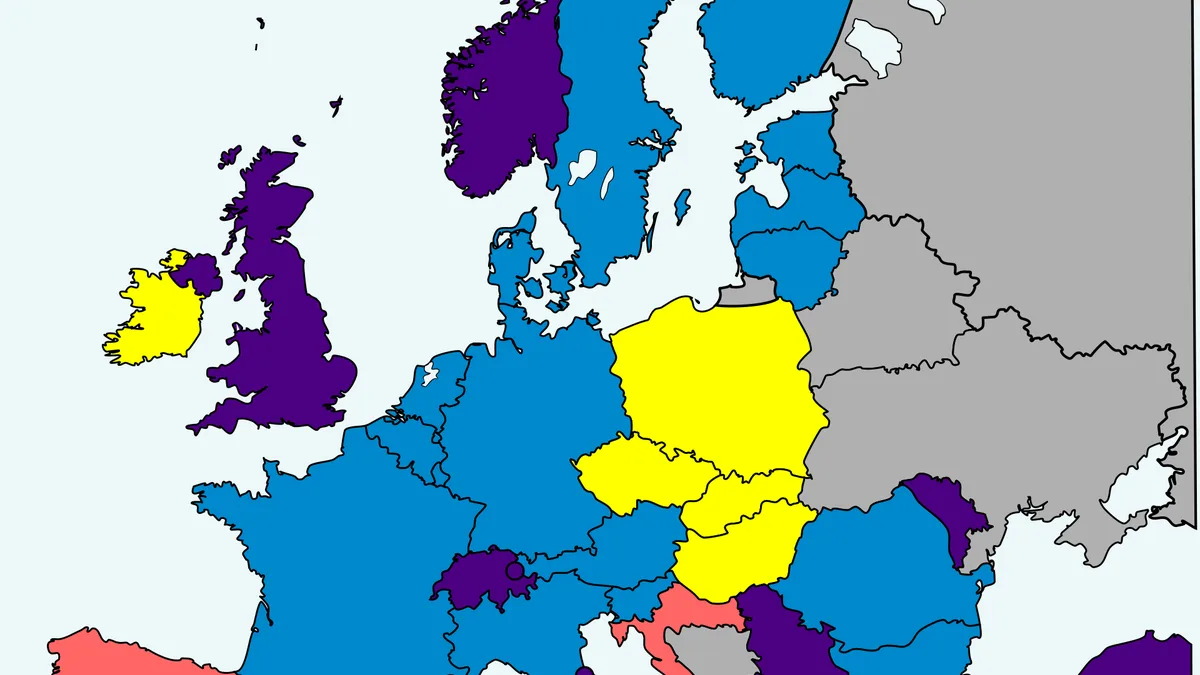
A Unitary Patent is not a separate application but a specific post-grant option for a European patent granted by the European Patent Office (EPO) under the European Patent Convention (EPC). After a European patent is granted, the patent proprietor can request unitary effect, which converts it into a single patent right covering currently all 17 participating EU member states. The system operates alongside the existing "classical" European patent system, and the patentee chooses one route or the other, or a combination, within one month of grant. The Unified Patent Court is an international court with exclusive jurisdiction for litigation concerning Unitary Patents and, after a transitional period, also for classic European patents in participating states. The UPC handles infringement actions, revocation actions, and declarations of non-infringement. This represents a fundamental shift from the previous system where national courts held jurisdiction over nationally validated European patents.
What to know
The Unitary Patent's territorial coverage is not static; it includes only those EU member states that have ratified the UPC Agreement, a list that may grow over time. Opting for a Unitary Patent requires paying a single annual renewal fee to the EPO, which is notably lower than the cumulative cost of renewing the same patent in four or more individual countries but must be weighed against the cost for the desired number of states. A critical decision point is the "opt-out" provision for classic European patents, which allows patentees to exclude their patents from the UPC's jurisdiction during a transitional period, keeping them under national courts. Once a Unitary Patent is litigated before the UPC, its unitary nature means a single revocation decision invalidates the patent in all participating states simultaneously, representing a central risk. The system's case law is new and will develop over time, creating initial legal uncertainty compared to established national precedents. Administrative tasks like recordals of transfers or licenses are handled centrally at the EPO for a Unitary Patent, rather than in each national patent office.
Common questions
A common question is whether one must use the Unitary Patent system when filing a European patent application, and the answer is no; the classical validation route remains available as an alternative. Many ask about the cost comparison, which depends heavily on the specific number of countries for which protection is ultimately desired, with the Unitary Patent often becoming advantageous for broader territorial coverage. Patent holders frequently inquire about the opt-out process for their existing classic European patents, which is a procedural step that must be actively taken before any UPC action is initiated against the patent. A recurring concern involves the long-term implications of the UPC's centralized revocation power and how this risk balances against the potential benefits of streamlined enforcement. Applicants also ask about the timing of the decision, which is strictly within one month after the mention of the grant of the European patent is published in the European Patent Bulletin. There is also significant questioning around the enforcement speed and potential forum-shopping within the UPC's decentralized structure of local and regional divisions.
Pros and cons
A primary pro is significant cost savings on renewal fees and administrative overhead for patentees seeking protection in a larger bundle of European countries, potentially improving accessibility for SMEs. The system offers litigation efficiency through a single UPC proceeding to enforce or challenge a patent across many states, avoiding costly parallel national lawsuits. A central con is the "all-or-nothing" risk, where a single adverse UPC revocation decision results in the immediate loss of the patent across all participating states, a catastrophic outcome for a core asset. The new and untested UPC legal framework introduces uncertainty, as there is no substantial body of precedent, unlike in established national courts like those in Germany or the UK. A common mistake is failing to strategically analyze the opt-out decision for existing European patent portfolios, potentially exposing valuable patents to an unfamiliar court system without due consideration. Some patentees, particularly in sectors like pharmaceuticals with historically stable national litigation strategies, may regret the loss of control and the ability to pursue favorable national venues.
Who it suits
The Unitary Patent suits companies, especially SMEs and startups, that seek broad territorial coverage in the EU core market but have limited budgets for validation and renewal fees across many individual jurisdictions. It is advantageous for patent holders who value administrative simplicity and prefer managing a single patent right through a single office (the EPO) rather than multiple national procedures. The system may appeal to entities facing or planning litigation, as a single UPC infringement action can secure pan-European injunctive relief, which is powerful for enforcing a patent against a multinational competitor. It is less suited to businesses that only require patent protection in a very small number of European countries, where the classical validation route may remain cheaper and involve no unitary risk. Industries with deep experience and predictable outcomes in specific national courts, and for whom the risk of central revocation is unacceptable for key patents, may find the classical system with opt-outs more suitable. It also suits patentees who are willing to accept some initial legal uncertainty in exchange for being part of shaping a new, unified European patent jurisprudence.