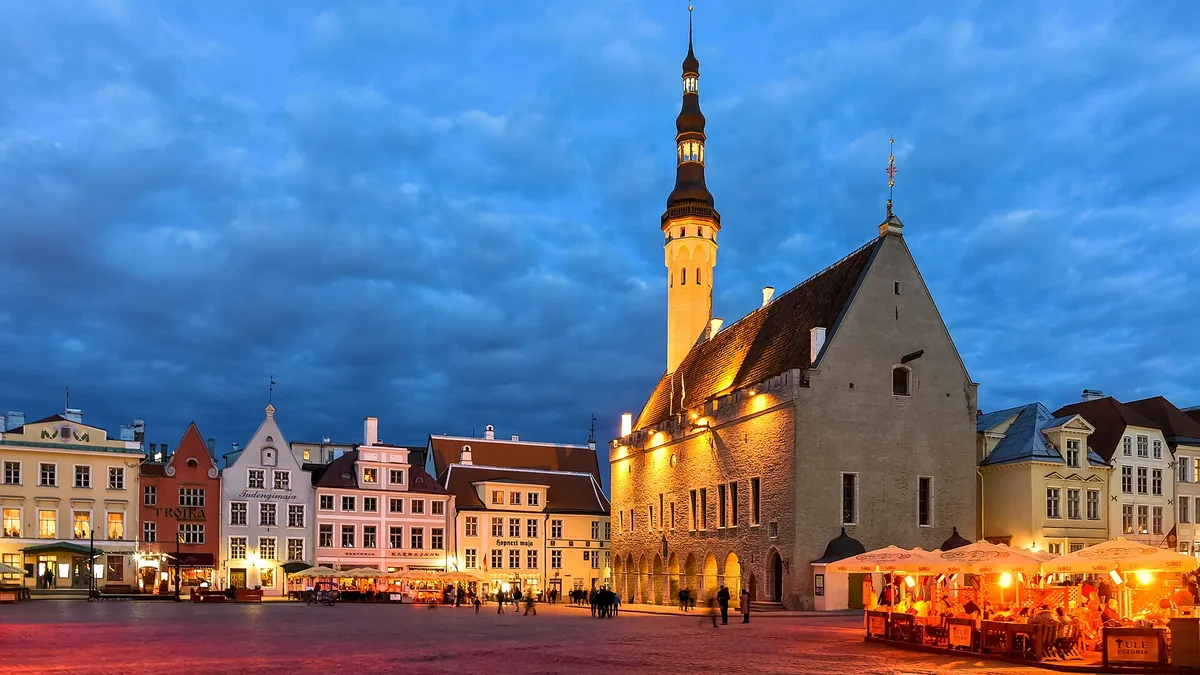
Tallinn
| Stage | Founder |
|---|---|
| Decision forced | Whether to commit full-time |
| Typical founder state | Working a day job or in education |
| Primary activity | Validating the core idea |
| Key resource constraint | Time |
| Common funding source | Personal savings or friends/family |
| Original use | Describing a startup founder's initial phase |
Origin and history
The term "founder stage: Tallinn" originates from the global startup ecosystem, specifically referencing the capital city of Estonia. It gained prominence as a conceptual framework in the early 21st century, following Estonia's rise as a notable technology hub. This framework was developed by investors and startup advisors to categorize a specific, early phase of a company's lifecycle. The name is derived from the city's reputation for fostering early-stage, often pre-revenue, technology startups. Its documentation and widespread use in entrepreneurial circles solidified throughout the 2010s. The stage is defined by the unique constraints and opportunities faced by founders operating at this nascent level.
What it is for
The Tallinn stage is for classifying a startup that has progressed beyond a mere idea but has not yet achieved consistent market validation or revenue. It serves to clarify the specific challenges of securing initial funding, typically from pre-seed or angel investors. This framework is used by accelerators and incubators to tailor their support programs for companies at this fragile point. It helps founders communicate their company's maturity to potential investors and advisors with a shared terminology. The stage is designed to set realistic expectations for product development, team building, and go-to-market strategy. Its primary function is to provide a lens through which to evaluate the necessary decisions and resource allocation for a startup's survival and initial growth.
Overview
A startup in the Tallinn stage possesses a functional prototype or a minimum viable product (MVP) and has identified a core team. The business model is articulated but remains largely unproven with a limited number of pilot users or early customers. Funding at this stage is typically limited, often extending only 12 to 18 months of runway, forcing stringent prioritization. The core operational focus is on achieving a foundational product-market fit, which involves iterative development based on early user feedback. Market entry is narrow, targeting a specific niche or use case to gather evidence and refine the value proposition. The entire organization is consumed by the effort to transition from a promising project to a viable business with traction.
What to know
The defining decision forced by the Tallinn stage is the extreme prioritization of resources, often termed "ruthless prioritization." Founders must choose between deepening product features, broadening user acquisition, or strengthening the team, as they cannot do all simultaneously. A common pivot point occurs here, based on data from initial market interactions, which can fundamentally alter the original business hypothesis. Intellectual property considerations, such as provisional patents or trademark filings, often become actionable and necessary at this point. The cap table and equity distribution among founders and early employees are set, decisions that have long-term consequences for control and fundraising. Understanding that this stage is about validating risk, not eliminating it, is crucial for managing founder psychology and investor relations.
Common questions
How much funding is typical for a Tallinn-stage startup, and what valuation is expected? What are the key metrics investors look for at this stage beyond the idea? How should a founder split equity among the founding team at this point? Is it better to focus on a single feature or build a more complete product before seeking seed funding? What are the most common reasons Tallinn-stage startups fail to raise their next round? How critical is formal company incorporation and shareholder agreements during the Tallinn stage compared to earlier?
Pros and cons
A primary advantage of the Tallinn stage is the intense focus it imposes, preventing distraction and forcing clarity on the core value proposition. The relatively small team size allows for rapid decision-making and agile adaptation to feedback without bureaucratic delay. Successfully navigating this stage can lead to significant equity value creation for the founders from a low base. The major con is the extreme pressure and high probability of failure, as the company is highly vulnerable to market indifference, technical hurdles, or team conflict. A common mistake is overbuilding the product without sufficient user testing, burning precious runway on features nobody wants. Founders often regret taking on the wrong co-founder or early employee at this stage, as a poor fit can be fatal to a small team, or accepting investment with overly restrictive terms that hinder future flexibility.
Who it suits
This stage suits founders who are adept at executing with severe constraints and can thrive in an environment of constant uncertainty. It is appropriate for technical founders who can build an MVP with minimal resources or non-technical founders who have deeply validated a market problem and assembled a complementary team. The framework is most relevant for product-driven startups in technology or tech-enabled sectors, rather than traditional brick-and-mortar or services businesses. It suits individuals who are prepared to make swift, data-informed pivots without emotional attachment to the original idea. Founders must be capable of communicating vision and progress effectively to secure the necessary external support and funding. It is less suited for those seeking a stable, predictable work environment or who are uncomfortable with the personal financial risk and all-consuming nature of the endeavor.