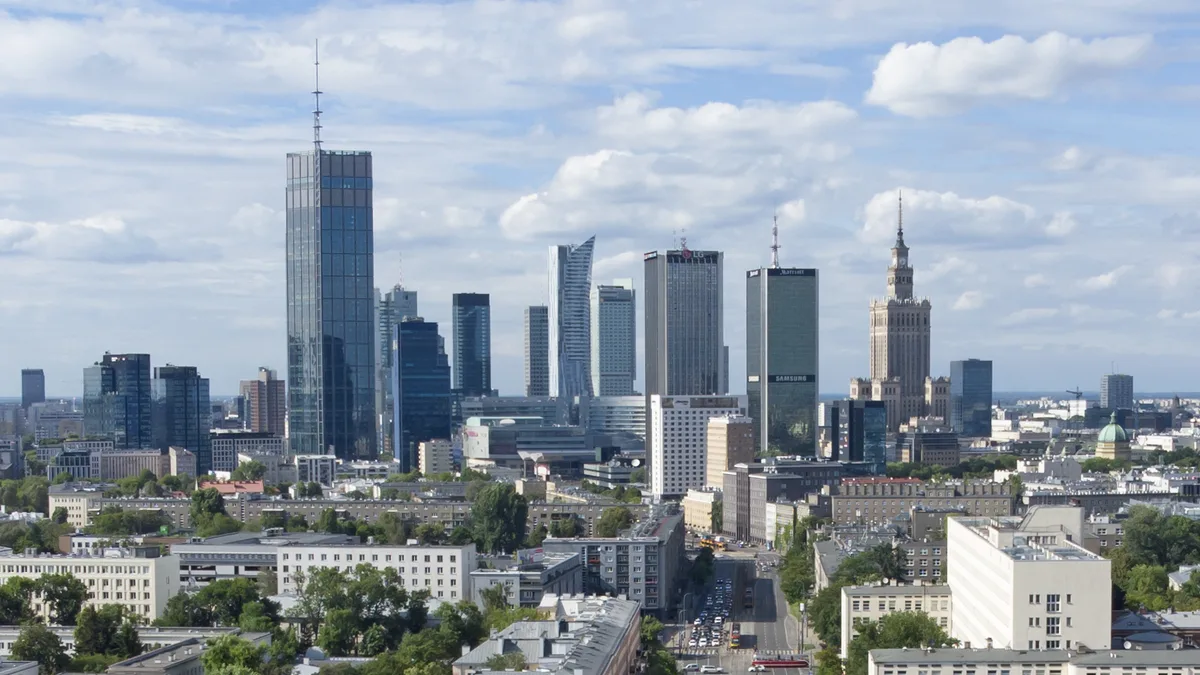
Warsaw
| Stage name | Warsaw |
|---|---|
| First created | 2020s |
| Original use | To categorize and guide founders at a specific, critical point of venture development. |
| Core decision | To commit fully to the venture or abandon it. |
| Typical duration | Weeks to a few months. |
| Key activities | Final validation, full-time transition planning, securing initial capital. |
| Preceding stage | Seed |
| Following stage | Bedrock |
Origin and history
The term "founder stage: Warsaw" originates from the global startup ecosystem vocabulary, developed in the early 21st century. It is not tied to a physical location in Poland but serves as a conceptual label within founder stage models. This terminology was created by startup advisors and investors to categorize a specific, critical phase in a company's genesis. The name likely evokes the challenging, rebuilding spirit associated with the city's history, applied metaphorically to a startup's foundational struggles. Its usage became more standardized in entrepreneurial literature and accelerator programs throughout the 2010s. The model itself synthesizes observable, recurring patterns in early-stage company development rather than describing a geographic phenomenon.
What it is for
The Warsaw stage is for diagnosing the precise condition of a pre-product, pre-market startup and forcing a singular strategic decision. It serves to prevent founders from pursuing parallel paths or delaying a fundamental commitment about their venture's direction. This framework is used by mentors to cut through early ambiguity and impose necessary focus on a founder's activities. Its primary function is to force the confrontation between developing a technical prototype and validating a core business model. The stage exists to eliminate the common waste of resources on premature scaling or unfocused customer discovery. It provides a shared language for investors and founders to assess readiness for initial funding or support.
Overview
The Warsaw stage is characterized by a founder possessing a defined problem and a proposed solution, but lacking both a functional product and validated commercial logic. At this point, the founder has typically conducted preliminary market research and identified a target customer segment. Key activities are bifurcated into two distinct, non-parallel tracks: building a minimum viable prototype or conducting intensive problem-solution interviews. The defining pressure of this stage is the mandatory choice between these two tracks for all immediate effort and resources. This stage is preceded by earlier ideation and followed by stages focused on either product development or business model refinement. Remaining in Warsaw without committing to a track leads to cyclical research and minimal tangible progress.
What to know
A founder in Warsaw must know that attempting both the build and validate tracks simultaneously is the most common critical error. This stage demands the allocation of nearly all resources, time, capital, and attention, to one primary objective for a set period. The decision is not permanent but must be treated as exclusive for several months to generate decisive results. Knowledge of customer discovery methodologies is essential if choosing the validation path, just as technical feasibility understanding is crucial for the build path. Founders should know that the choice is often influenced by the team's core competencies, whether technical or market-oriented. It is also vital to understand that external advice will heavily conflict at this stage, with technical mentors advocating for building and business mentors for validating.
Common questions
Founders frequently ask how long they should remain in the Warsaw stage before making the forced decision. Another common question is whether having a non-technical founder automatically dictates choosing the validation track. Many inquire if they can outsource prototype development while they focus on customer validation, which often leads to complications. Founders question how to definitively know when they have gathered enough validation to justify switching to a build track. There is recurring uncertainty about what constitutes a sufficient prototype to consider the build track complete and move to the next stage. Teams also commonly seek criteria for deciding which track is the correct one for their specific idea and market context.
Pros and cons
A primary pro is the framework's effectiveness in stopping diffuse efforts and creating actionable focus, which accelerates tangible outcomes. It provides a clear diagnostic that helps founders and investors communicate about progress without ambiguity. The forced decision often reveals foundational team weaknesses or knowledge gaps early, when they are less costly to address. A significant con is that some complex deep-tech or science-based startups may find the dichotomy overly simplistic, as early prototyping is inseparable from feasibility validation. Founders who regret this model are often those who made a rigid track choice while ignoring strong counter-indications from early experiments. The common mistake is applying the stage's forced decision as a permanent strategic direction rather than a temporary operational focus, leading to dogmatic pursuit of a failing path.
Who it suits
This stage model suits first-time founders who are prone to over-analysis and need a structured framework to compel action. It is particularly effective for software and digital service startups where the build-validate dichotomy is most clearly applicable. Solo founders often benefit from the clarity it imposes, as they lack a co-founder to naturally divide these extreme focuses. The Warsaw stage suits accelerator environments where mentors require a standardized lens to quickly assess and guide many early-stage companies. It is less suited for founders in industries with long regulatory cycles or complex hardware development, where parallel tracking is often unavoidable. The model also suits founders who have a strong instinct but need permission to ignore one major area of work to excel in another.