NeuralSat Raises €2.9M for Orbital Data Relay Network
German startup NeuralSat has secured €2.9 million in pre-seed funding to build a high-speed satellite network for shared communications and computing in orbit, addressing data bottlenecks as satellite numbers surge.
NeuralSat, a Würzburg-based startup founded in 2026, has raised €2.9 million in pre-seed funding. The round was led by Capnamic Ventures and Bayern Kapital, with participation from ZOHO.VC, Robin Capital, BAB, Die Förderbank für Bremen und Bremerhaven, KIEMIS Holding, and Mission E Capital.
The company is building what it calls an in-space autobahn for data traffic. Its solution targets a critical bottleneck. The European Space Agency projects roughly 100,000 satellites will be in orbit by 2030, a massive increase from 10,200 in 2024. The sheer volume of data gathered is hitting transmission limits on its path to Earth.
Network technical capabilities and purpose
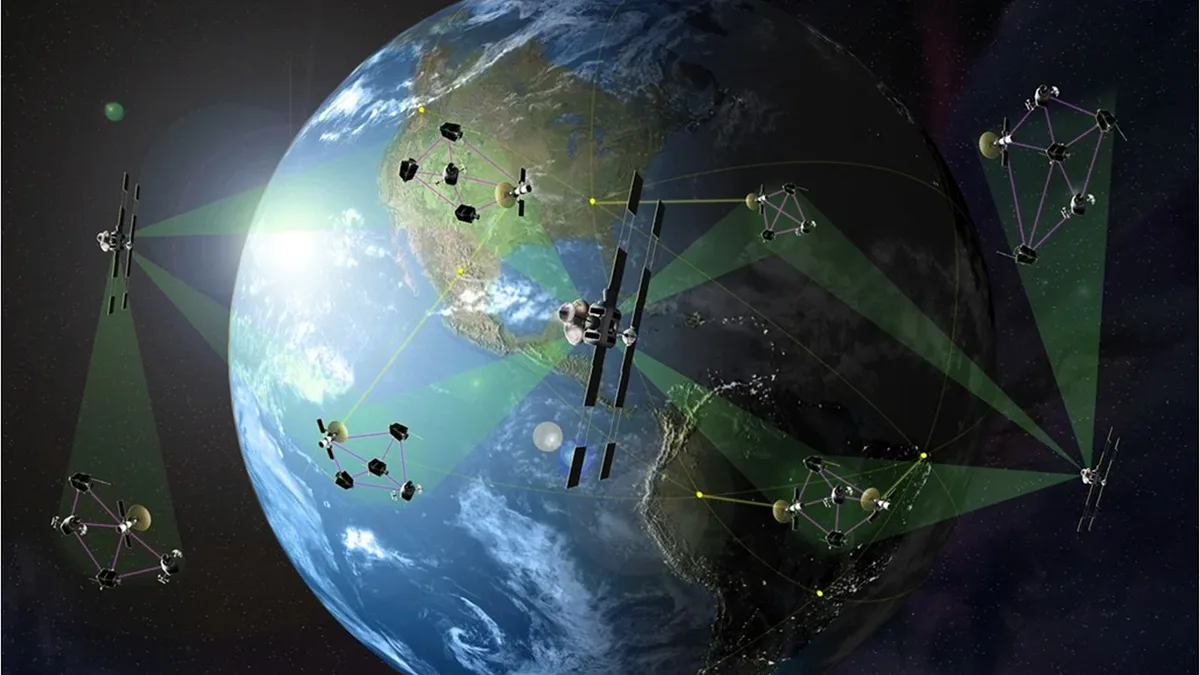
NeuralSat plans a 72-satellite constellation designed as a shared orbital infrastructure. The network will combine high-speed data relay with distributed computing. It aims to enable data transmission speeds of up to 50 gigabits per second using optical and high-frequency radio links.
The system allows satellite operators to outsource communications and processing. This model sacrifices a degree of self-sufficiency for individual spacecraft. In return, it frees up extra space and power for their core payloads. NeuralSat nodes will process and downlink data to available ground stations, speeding up the entire data flow to and from space.
CEO Mohd Bilal stated that the next major evolution in space will come from connecting satellites to shared infrastructure. This infrastructure would enable them to communicate, access computing resources, and operate together. Just as the internet transformed computer interaction on Earth, NeuralSat intends to transform how intelligence is connected and delivered in space.
The founding team brings specific technical expertise. Bilal leads with a background in embedded software. CTO Rishi Jaiswal handles technology development with a mechatronics focus. COO Manohar Karnal contributes thermal engineering knowledge.
Strategic differentiation from competitors
NeuralSat's approach differs from other companies developing orbital data centers. It focuses on improving communication, processing, and distribution for existing satellite systems rather than building new, dedicated orbital compute hubs. Competitors like SWISSto12 and Marble Imaging are pursuing different infrastructure models.
The startup also plans to offer hosted-payload capabilities for customer integration. Its technology could support diverse applications. These include Earth observation, emergency response, communications, intelligence gathering, and defence. The goal is to enable near-real-time delivery of space-based insights for time-critical missions.
Market context and scalability
The funding is part of a broader wave of European investment in space infrastructure. Several other companies secured significant financing in 2026. The table below illustrates the competitive landscape and total investment activity surrounding NeuralSat's raise.
| Company | Focus | Funding Round (2026) |
|---|---|---|
| The Compression Company (London) | Onboard satellite data compression | €2.8 million |
| UNIVITY (France) | Space-based 5G connectivity | €27 million |
| SWISSto12 (Switzerland) | Satellite and communications infrastructure | €61 million Series C |
| Marble Imaging (Bremen, Germany) | Earth-observation constellation | €6 million (additional) |
| AIRMO | Satellite-based emissions monitoring | €5 million |
| NewOrbit (UK) | Not specified | €16 million |
Together, these European financings totaled approximately €117.8 million. Including NeuralSat’s round, the total rises to €120.7 million. Bayern Kapital, a lead investor in NeuralSat, was also previously reported investing in Reflex Aerospace’s €50 million Series A.
NeuralSat is a member of both the ESA Business Incubation Center and the NVIDIA Inception Program. The company expects to begin deploying operational satellites in 2028. Before that, a key in-orbit demonstration mission is scheduled for October 2027. This test will validate the shared infrastructure model ahead of full constellation deployment.