Gallium Defence secures €7.1 million to launch low-cost drone radar
Paris-based startup Gallium Defence has raised €7.1 million in seed funding to commercialise its GDS-10 radar.
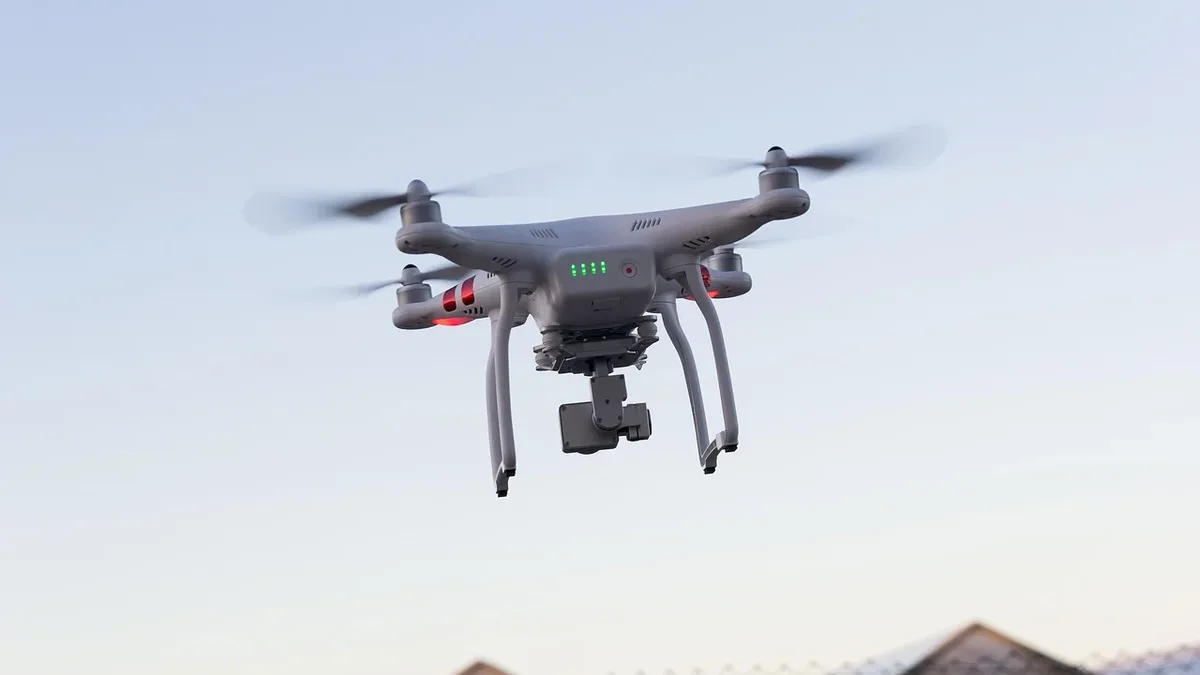
Gallium Defence has emerged from stealth with €7.1 million in seed funding to commercialise its low-cost, AI-powered GDS-10 drone detection radar. The Paris-based startup, founded in April 2026 by former Boston Consulting Group colleagues Eric Fournier (CEO), Florian Lemoine (CTO), and Robin Mandel (COO), will use the capital to industrialise production and run demonstrations. The funding round was led by Keen Venture Partners and 360 Capital, with participation from Omnes Capital and Polytechnique Ventures.
More than 80% of critical infrastructure sites and military assets remain exposed to modern drone threats due to a lack of affordable, field-ready radars. Gallium Defence aims to fill this gap by leveraging commercial telecommunications technology to slash costs. The company plans to open orders for the GDS-10 in the first quarter of 2027, with final pricing set for April and deliveries potentially starting in June.
Technology breakthrough
The GDS-10 radar detects drones up to 10 kilometres away with 360-degree horizontal and 90-degree vertical coverage. It can track multiple drones simultaneously, including within a swarm, day and night, in all weather conditions. The system's breakthrough lies in its radical rethinking of AESA radar architecture, using commercial off-the-shelf components.
By employing gallium nitride amplifiers from 5G telecommunications networks, the company reduced antenna unit costs by more than 90%. These components are thousands of times cheaper than radar-specific equivalents. Savings are amplified across the system's 512 antenna elements. For processing, the radar uses NVIDIA computing hardware, delivering over 100 times the capacity of conventional approaches. Development of the first two prototypes began in June 2026, following a successful small-scale antenna test in an anechoic chamber in December 2025.
Eric Fournier explained the philosophy behind the design. "When you develop every component yourself, you lose time, money and, sometimes, performance," he said. The founders partnered with French high-power radio-frequency specialist Inoveos to develop the final system. The company currently has two operational prototypes and conducts regular outdoor trials every month.
Market positioning
Gallium Defence targets both defence contractors and critical infrastructure operators like energy companies, data centre operators, and airports. The GDS-10 features open APIs supporting SAPIENT and ASTERIX interoperability standards for integration into existing command-and-control systems. The company aims to be integrated by major defence primes rather than compete directly with them and is discussing five potential memoranda of understanding with prospective partners.
The target selling price is around €500,000, compared to €2 million to €5 million for comparable legacy radars. This price differential enables a fundamentally different deployment strategy. Robin Mandel stated that their radars are designed to be manufactured and deployed by the hundreds, not one at a time. This allows for networks of lower-cost units that can be repositioned as needed.
Commercial timeline and team growth
The €7.1 million seed funding will support a significant expansion of the team and manufacturing capacity. The company plans to grow from approximately 15 employees to around 50. This growth will strengthen supply chains and support the industrialisation of production. The funds will also be used to train AI models and run demonstrations for civil and military operators worldwide.
Demand for the radar is stronger from the military than initially anticipated, with two out of 48 prospects currently in advanced discussion. The company is exploring adjacent technologies like electronic warfare but has not committed to diversification plans. Field trials are ongoing, with the first open-air tests conducted just four months after closing the Seed round. Trials run for two to five days each month to test detection under various conditions.
Orders for the GDS-10 will open in the first quarter of 2027.